Why We Farm…..
Why We Farm
Part 1 of 14 in the "Rooted in Heritage, Growing for Tomorrow" Series
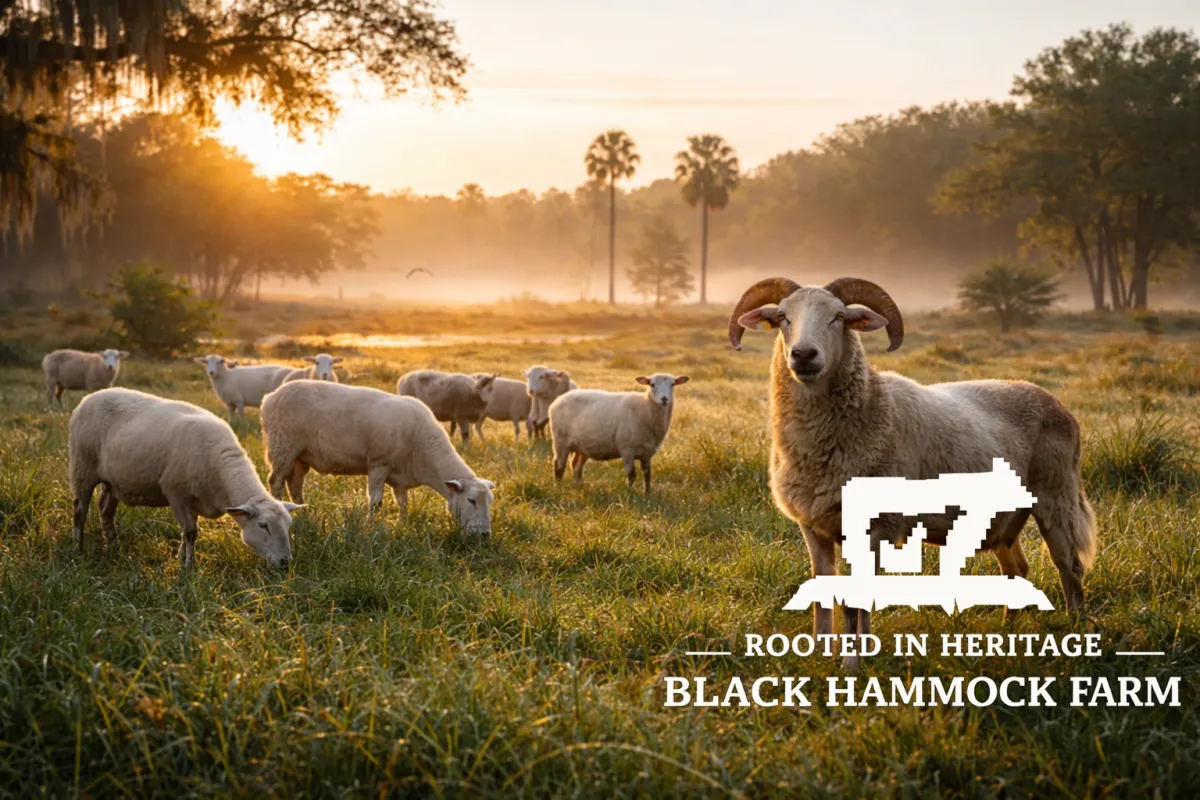
Every morning, before the Florida sun climbs high enough to make the humidity unbearable, I walk among the ewes.
They know me by now. Some amble over, curious. Others continue grazing, content in the rhythm they've established. Baba V., our Katahdin ram, surveys his domain with the quiet dignity of a creature who understands his purpose.
In these moments—the dew still heavy on the pasture, the only sounds being the soft bleating and the distant calls of herons from Lake Jesup—I remember why we do this.
Live, Fresh, Local
That phrase isn't just a tagline. It's a philosophy that guides every decision we make at Black Hammock Farm.
Live means our animals roam free, expressing their natural behaviors, cared for according to principles that prioritize their wellbeing over convenience.
Fresh means what we provide—whether eggs from our heritage chickens, lamb for family celebrations, or the eco-friendly brush clearing services of our Rent-A-Herd program—comes directly from land we steward with our own hands.
Local means we're not shipping products across the country or competing with industrial operations. We're serving our neighbors. We're part of this community.
An Inheritance, Not Just an Investment
The land beneath our sheep's hooves has been farmed for over 160 years. This region—the Black Hammock—was once the celery capital of Florida, producing a quarter of America's supply in the 1920s. The rich muck soil that made those harvests possible is the same soil our animals graze today.
When I walk the property, I sometimes find remnants of that era: concrete casings from artesian wells that once irrigated acres of celery. Railroad ties that hint at the infrastructure built to ship produce to tables across the nation.
I'm not naïve enough to think I'm continuing that specific legacy. Celery farming is long gone from Oviedo. But I believe I'm continuing something equally important: the idea that this land is meant to produce, to nourish, to connect people with where their food comes from.
Why Katahdin Sheep?
People sometimes ask why sheep—and why this particular breed—in Central Florida of all places.
The answer comes down to stewardship.
Katahdin sheep were developed in Maine specifically to thrive in challenging conditions. Unlike wool breeds that suffer in humidity, Katahdins have a hair coat that sheds naturally. No shearing required. No heat stress from carrying wool in a Florida summer.
They're naturally resistant to many of the parasites that plague other sheep in our climate. That means less medication, less intervention, healthier animals.
And their temperament? Docile, curious, remarkably gentle. When families visit the farm—when children meet livestock for the first time—the ewes often approach with the same curiosity the children show toward them.
This isn't an accident. We chose a breed that could thrive here, produce here, and welcome our community here.
More Than a Farm
Over the coming weeks, I'll be sharing more about what Black Hammock Farm does for our community. You'll hear about:
Our heritage breeding programand why preserving traditional livestock matters
Rent-A-Herd, where our sheep provide eco-friendly vegetation management without chemicals or machinery
The Backyard Chicken Programhelping neighbors start their own small-scale agricultural journeys
Conservation grazingand how sheep can actually help restore Florida's threatened wetlands
The agricultural classification challenge we're facing, and why it matters for every small farm in Seminole County
I'll also share some difficult truths about the obstacles small farms face—not to complain, but because I believe most people want to support local agriculture. They just need to understand what's at stake.
An Invitation
If you've never visited a working farm, I want to change that. If you've forgotten what it feels like to collect a warm egg from a nest, to watch lambs find their legs in a spring pasture, to breathe air that smells like hay and earth instead of exhaust—I want to remind you.
And if you believe, as I do, that communities are stronger when they're connected to the land that sustains them, then I hope you'll follow along.
This isn't just our story. It's the story of every small farm trying to survive, every family trying to pass on something meaningful, every piece of agricultural land fighting to remain productive rather than paved.
Welcome to Black Hammock Farm.
Next week in Part 2: "The Land Remembers"—we'll explore the fascinating history of the Black Hammock region, from its celery farming heyday to its place in Seminole County's agricultural heritage.
From the Pasture:Our fall lambing season is underway. Three healthy lambs arrived this week, and the ewes are proving once again why Katahdins are known for their exceptional maternal instincts. More updates to come.
Share this post:Do you know someone who values local agriculture? Someone who might not realize there's still a working farm in the heart of Seminole County? Please share this story. Every reader helps preserve the legacy.
#RootedInHeritage #BlackHammockFarm #LiveFreshLocal

