The Land Remembers
The Land Remembers
Part 2 of 14 in the “Rooted in Heritage, Growing for Tomorrow” Series
There are places where history is preserved in museums.
And there are places where history is preserved in the soil.
The Black Hammock is the latter.
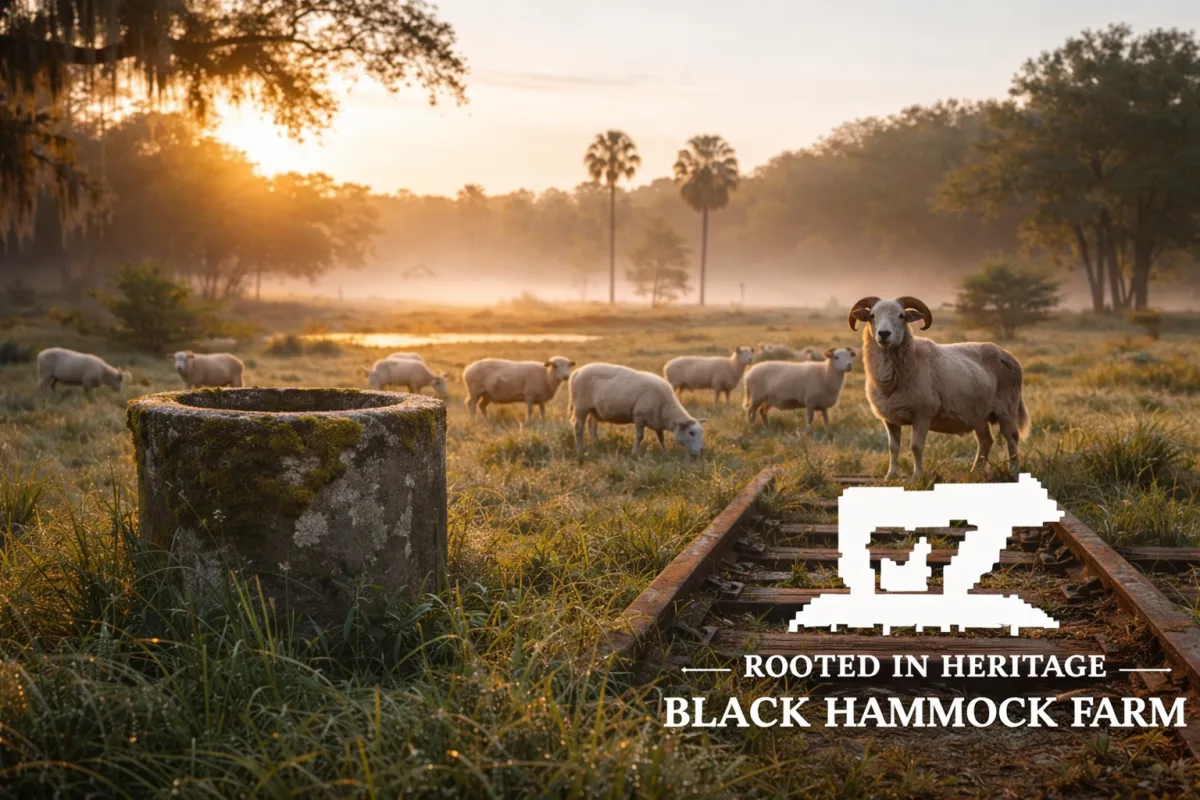
When you walk this land slowly—when you pay attention—you start to notice things that don’t belong to the present. Concrete collars half-buried and moss-covered, marking where artesian wells once flowed. Old railroad ties emerging from the ground at odd angles, their purpose long forgotten by most, but not by the land itself.
This ground remembers what it was asked to do.
And it remembers that it delivered.
When the Black Hammock Fed a Nation
In the early 1900s, this region wasn’t an afterthought on a map. It was an agricultural engine.
The Black Hammock—named for its dark, fertile muck soil—became the celery capital of Florida. By the 1920s, Oviedo and the surrounding area were producing nearly a quarter of the celery consumed in the United States. That didn’t happen by accident.
Farmers drained wetlands strategically. Artesian wells provided consistent irrigation. Rail lines were laid directly into the fields so produce could be harvested, packed, and shipped north within hours. This land was valuable because it was productive.
Families built their lives around that productivity.
Communities grew because the land gave them a reason to stay.
That era eventually faded. Markets changed. Development pressures increased. Farming moved elsewhere. But the soil never forgot what it was capable of.
Soil Has a Memory
Modern agriculture often treats land like a blank slate—something to be reshaped, paved, or repurposed. But anyone who works the ground knows better.
Soil remembers patterns.
It remembers where water wants to flow.
It remembers what grows easily and what struggles.
It remembers how it was managed—and mismanaged.
The rich muck soil of the Black Hammock still responds when treated with respect. Native grasses rebound quickly. Pastures recover faster than expected. Wetland edges stabilize when grazed correctly instead of mowed or sprayed.
This isn’t coincidence. It’s continuity.
We didn’t create this land’s productivity. We inherited it.
Stewardship Isn’t About Going Backward
Honoring history doesn’t mean pretending it’s still 1925.
We aren’t growing celery.
We aren’t laying new rail lines.
We aren’t draining wetlands for row crops.
What wearedoing is asking a more modern question:
How can this land continue to produce—without being destroyed in the process?
For us, the answer came through livestock suited to the environment. Katahdin sheep don’t fight Florida’s heat and humidity—they thrive in it. They graze selectively. They disturb the soil lightly. They manage vegetation without chemicals, machinery, or constant human intervention.
In many ways, they’re doing what celery once did: workingwiththe land instead of against it.
The Cost of Forgetting
When people say, “There’s no farming left here,” what they often mean is that they no longer recognize it.
Farming today doesn’t always look like it did a century ago. It’s quieter. Smaller. More adaptive. And often, more fragile.
Once land loses its agricultural identity, it becomes easier to justify paving it. Once a farm disappears, it rarely comes back. And when the last working fields are gone, so is the local knowledge of how to feed a community from its own soil.
Forgetting history has consequences.
Remembering it creates responsibility.
Carrying the Thread Forward
We don’t claim ownership of this legacy.
We claim guardianship.
Our role is temporary. The land will outlast us. The question is whether it will remain productive—or simply preserved as a memory behind fences and plaques.
Every decision we make at Black Hammock Farm is shaped by that awareness. We aren’t just farming for today’s needs. We’re farming in a way that leaves options open for those who come next.
Because this land has already proven what it can do—when it’s allowed to work.
What Comes Next
In the next part of this series, we’ll talk about the animals themselves—why heritage livestock matter, how genetic diversity is quietly disappearing, and why preserving functional breeds like Katahdin sheep isn’t nostalgia, but necessity.
The land remembers.
The question is whether we’re willing to listen.
Next in Part 3: “Built to Belong Here” — Why heritage livestock breeds are disappearing, and why Florida farms can’t afford to lose them.

