
Small Call to Action Headline
Black hammock farm'S
Katahdin Sheep Wetlands Management Study
Why This Study Matters
Florida faces a critical challenge in wetland management as invasive species threaten ecosystem integrity across the state. The South Florida Water Management District identifies approximately 200 introduced plant and animal species established in the region, with 66 non-native plant species designated as priorities for control. Current management strategies rely heavily on mechanical removal, prescribed burns, and herbicide applications—methods that are expensive, labor-intensive, and may have unintended ecological consequences.
Simultaneously, livestock grazing in wetland environments remains controversial and understudied, particularly in subtropical climates. While extensive research documents livestock impacts on wetlands, the vast majority focuses on cattle in temperate regions. Research on sheep grazing in subtropical wetlands, specifically using parasite-resistant hair sheep breeds, remains critically limited.
1579 Walsh Street Oviedo,
Florida 32765
COMPANY
FARM SERVICES
LIVESTOCK PROGRAMS
FOLLOW US


POWERED BY:

© 2025 Black Hammock Family Farm.
All rights reserved.
The Participants: The Innovation of Using Katahdin Sheep In WetLAND MANAGEMENT
Katahdin sheep represent a unique opportunity for Florida wetland management due to their specific biological adaptations:
Parasite Resistance: Research demonstrates that Katahdin sheep possess significantly higher parasite resistance than conventional wool breeds. Studies conducted at Virginia Tech and Arkansas showed Katahdin sheep had fecal egg counts 45% lower than Dorper crosses and required substantially less anthelmintic treatment than wool breeds. Their Caribbean hair sheep ancestry provides genetic resistance evolved in hot, humid, high-parasite environments—precisely the conditions present in Florida wetlands.
Climate Adaptation: Katahdin sheep demonstrate well-developed heat tolerance in tropical and subtropical regions. Their hair coat (rather than wool) allows superior thermoregulation in humid conditions where wool breeds experience heat stress. University of Florida research identifies Katahdin as one of six meat breeds demonstrating ability to naturally minimize parasite burdens in Florida conditions.
Selective Grazing Behavior: Sheep exhibit different grazing patterns than cattle. Research indicates sheep nibble grass close to the ground and selectively consume flowers and certain vegetation types. This selective grazing could target specific invasive plant species while minimizing impact on desired native vegetation.
Reduced Wetland Impact: Sheep are lighter and more agile than cattle, causing less soil compaction and trampling damage. Studies in New Zealand and British Columbia specifically noted that sheep grazing can be preferable to cattle in fragile wetland environments vulnerable to poaching (soil damage from hoofprints in wet conditions).
Conservation and Economic Benefits
Vegetation Management Without Chemicals: Multiple studies demonstrate that moderate grazing intensity can increase plant species diversity and control dominant invasive species that exclude less competitive native plants. Research in California vernal pools showed that reintroduced grazing at moderate stocking rates significantly increased both diversity and native cover after just two years. European wetland studies found that patchy, occasionally intense grazing increased protected plant species and habitat heterogeneity while benefiting both conservation and agricultural goals.
Cost-Effective Management: The solar grazing industry demonstrates that sheep can provide effective, economical vegetation management. While mechanical mowing requires expensive equipment, fuel, and risks panel/infrastructure damage, sheep provide continuous low-cost maintenance while generating potential revenue through meat production.
Ecosystem Services: Properly managed grazing can create habitat heterogeneity that benefits wildlife. Research in Hungarian marshes showed increases in wetland bird populations, protected plant species, and patches of open vegetation with grazing intensity gradients. The key is avoiding continuous heavy grazing while allowing patchy, varied grazing pressure.
Carbon Footprint Reduction: Replacing mechanical vegetation management eliminates fossil fuel consumption for mowers while integrating livestock production into ecosystem restoration.
PRELIMINARY HYPOTHESES .
Vegetation Control
Hypothesis: Katahdin sheep grazing at moderate stocking densities (2-4 sheep/acre for 2-4 week periods) will significantly reduce biomass of target invasive species compared to ungrazed control areas, while maintaining or increasing native plant species diversity.
Water Quality
Hypothesis: Moderate-intensity sheep grazing will maintain water quality parameters (turbidity, nitrogen, phosphorus, fecal coliform bacteria) within acceptable ranges for wetland ecosystem health, with impacts significantly lower than documented cattle grazing effects.
SHEEP HEALTH
Hypothesis: Katahdin sheep grazing on Florida wetland vegetation will maintain adequate body condition scores and parasite resistance within acceptable management thresholds, requiring no more than 15% of animals to need anthelmintic treatment during the grazing period.
ECoNOMICAL VIABILITY
Hypothesis: Sheep grazing vegetation management costs will be ≤50% of equivalent mechanical mowing and herbicide application costs over a 12-month period, while producing marketable lamb weight gain.
Biodiversity Impact
Hypothesis: Sheep grazing vegetation management costs will be ≤50% of equivalent mechanical mowing and herbicide application costs over a 12-month period, while producing marketable lamb weight gain.
ETHICAL CONSIDERATIONS & LIMITATIONS .
ANIMAL WELFARE
All sheep management will follow American Veterinary Medical Association guidelines
Monitoring protocols ensure early detection of heat stress or health issues
Access to shade, clean water, and supplemental minerals as needed
Immediate veterinary intervention protocols established
Environmental Protections
Grazing exclusion during critical wildlife breeding/nesting periods
Monitoring for any decline in threatened or endangered species
Adaptive management to respond to unintended impacts
Coordination with Florida Fish and Wildlife Conservation Commission
Study Limitations
Results may be specific to Black Hammock Farm's wetland types and may not generalize to all Florida wetlands
Seasonal variation requires multi-year data collection for robust conclusions
Initial infrastructure investment may limit adoption by other landowners
Weather variability in Florida may affect consistency of grazing schedules
BLACK HAMMOCK FARM NEWS
Why We Farm…..
Why We Farm
Part 1 of 14 in the "Rooted in Heritage, Growing for Tomorrow" Series
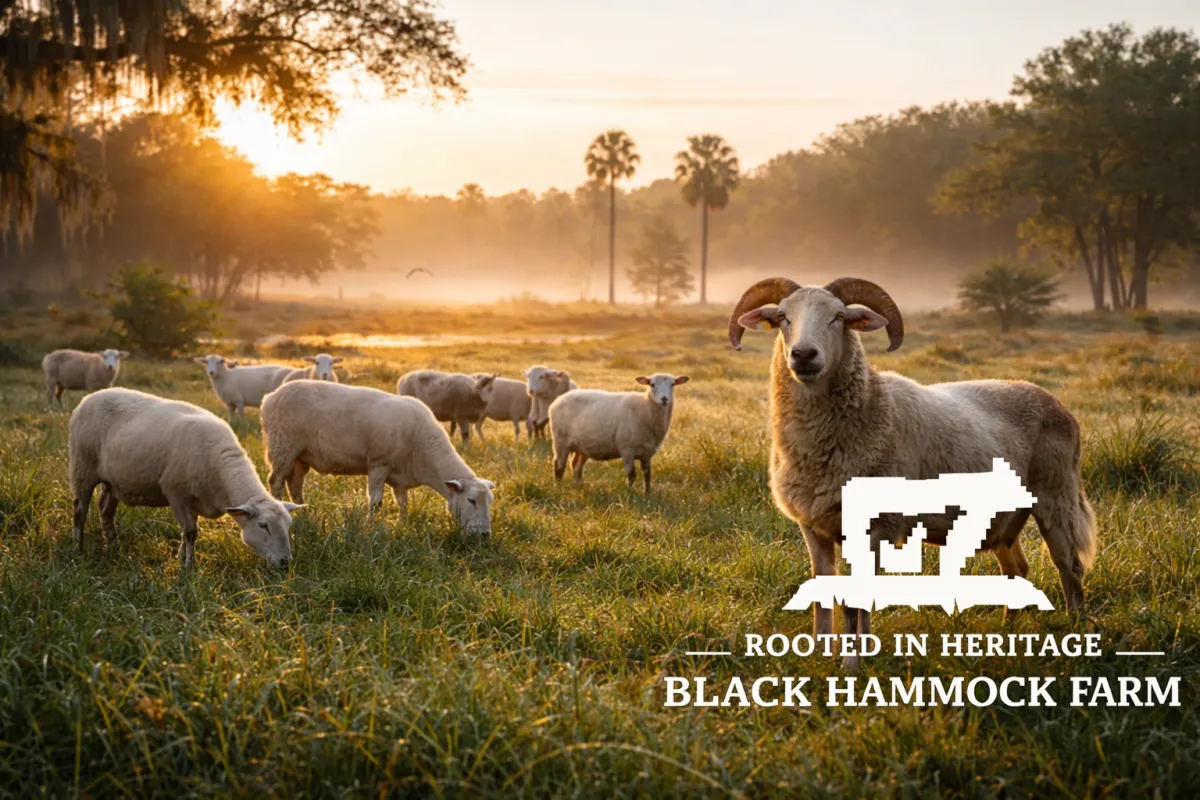
Every morning, before the Florida sun climbs high enough to make the humidity unbearable, I walk among the ewes.
They know me by now. Some amble over, curious. Others continue grazing, content in the rhythm they've established. Baba V., our Katahdin ram, surveys his domain with the quiet dignity of a creature who understands his purpose.
In these moments—the dew still heavy on the pasture, the only sounds being the soft bleating and the distant calls of herons from Lake Jesup—I remember why we do this.
Live, Fresh, Local
That phrase isn't just a tagline. It's a philosophy that guides every decision we make at Black Hammock Farm.
Live means our animals roam free, expressing their natural behaviors, cared for according to principles that prioritize their wellbeing over convenience.
Fresh means what we provide—whether eggs from our heritage chickens, lamb for family celebrations, or the eco-friendly brush clearing services of our Rent-A-Herd program—comes directly from land we steward with our own hands.
Local means we're not shipping products across the country or competing with industrial operations. We're serving our neighbors. We're part of this community.
An Inheritance, Not Just an Investment
The land beneath our sheep's hooves has been farmed for over 160 years. This region—the Black Hammock—was once the celery capital of Florida, producing a quarter of America's supply in the 1920s. The rich muck soil that made those harvests possible is the same soil our animals graze today.
When I walk the property, I sometimes find remnants of that era: concrete casings from artesian wells that once irrigated acres of celery. Railroad ties that hint at the infrastructure built to ship produce to tables across the nation.
I'm not naïve enough to think I'm continuing that specific legacy. Celery farming is long gone from Oviedo. But I believe I'm continuing something equally important: the idea that this land is meant to produce, to nourish, to connect people with where their food comes from.
Why Katahdin Sheep?
People sometimes ask why sheep—and why this particular breed—in Central Florida of all places.
The answer comes down to stewardship.
Katahdin sheep were developed in Maine specifically to thrive in challenging conditions. Unlike wool breeds that suffer in humidity, Katahdins have a hair coat that sheds naturally. No shearing required. No heat stress from carrying wool in a Florida summer.
They're naturally resistant to many of the parasites that plague other sheep in our climate. That means less medication, less intervention, healthier animals.
And their temperament? Docile, curious, remarkably gentle. When families visit the farm—when children meet livestock for the first time—the ewes often approach with the same curiosity the children show toward them.
This isn't an accident. We chose a breed that could thrive here, produce here, and welcome our community here.
More Than a Farm
Over the coming weeks, I'll be sharing more about what Black Hammock Farm does for our community. You'll hear about:
Our heritage breeding programand why preserving traditional livestock matters
Rent-A-Herd, where our sheep provide eco-friendly vegetation management without chemicals or machinery
The Backyard Chicken Programhelping neighbors start their own small-scale agricultural journeys
Conservation grazingand how sheep can actually help restore Florida's threatened wetlands
The agricultural classification challenge we're facing, and why it matters for every small farm in Seminole County
I'll also share some difficult truths about the obstacles small farms face—not to complain, but because I believe most people want to support local agriculture. They just need to understand what's at stake.
An Invitation
If you've never visited a working farm, I want to change that. If you've forgotten what it feels like to collect a warm egg from a nest, to watch lambs find their legs in a spring pasture, to breathe air that smells like hay and earth instead of exhaust—I want to remind you.
And if you believe, as I do, that communities are stronger when they're connected to the land that sustains them, then I hope you'll follow along.
This isn't just our story. It's the story of every small farm trying to survive, every family trying to pass on something meaningful, every piece of agricultural land fighting to remain productive rather than paved.
Welcome to Black Hammock Farm.
Next week in Part 2: "The Land Remembers"—we'll explore the fascinating history of the Black Hammock region, from its celery farming heyday to its place in Seminole County's agricultural heritage.
From the Pasture:Our fall lambing season is underway. Three healthy lambs arrived this week, and the ewes are proving once again why Katahdins are known for their exceptional maternal instincts. More updates to come.
Share this post:Do you know someone who values local agriculture? Someone who might not realize there's still a working farm in the heart of Seminole County? Please share this story. Every reader helps preserve the legacy.
#RootedInHeritage #BlackHammockFarm #LiveFreshLocal
1579 Walsh Street Oviedo,
Florida 32765
COMPANY
FARM SERVICES
LIVESTOCK PROGRAMS
FOLLOW US
POWERED BY:
© 2025 Black Hammock Family Farm. All rights reserved.