
Small Call to Action Headline
Black hammock farm'S
Katahdin Sheep Wetlands Management Study
Why This Study Matters
Florida faces a critical challenge in wetland management as invasive species threaten ecosystem integrity across the state. The South Florida Water Management District identifies approximately 200 introduced plant and animal species established in the region, with 66 non-native plant species designated as priorities for control. Current management strategies rely heavily on mechanical removal, prescribed burns, and herbicide applications—methods that are expensive, labor-intensive, and may have unintended ecological consequences.
Simultaneously, livestock grazing in wetland environments remains controversial and understudied, particularly in subtropical climates. While extensive research documents livestock impacts on wetlands, the vast majority focuses on cattle in temperate regions. Research on sheep grazing in subtropical wetlands, specifically using parasite-resistant hair sheep breeds, remains critically limited.
1579 Walsh Street Oviedo,
Florida 32765
COMPANY
FARM SERVICES
LIVESTOCK PROGRAMS
FOLLOW US


POWERED BY:

© 2025 Black Hammock Family Farm.
All rights reserved.
The Participants: The Innovation of Using Katahdin Sheep In WetLAND MANAGEMENT
Katahdin sheep represent a unique opportunity for Florida wetland management due to their specific biological adaptations:
Parasite Resistance: Research demonstrates that Katahdin sheep possess significantly higher parasite resistance than conventional wool breeds. Studies conducted at Virginia Tech and Arkansas showed Katahdin sheep had fecal egg counts 45% lower than Dorper crosses and required substantially less anthelmintic treatment than wool breeds. Their Caribbean hair sheep ancestry provides genetic resistance evolved in hot, humid, high-parasite environments—precisely the conditions present in Florida wetlands.
Climate Adaptation: Katahdin sheep demonstrate well-developed heat tolerance in tropical and subtropical regions. Their hair coat (rather than wool) allows superior thermoregulation in humid conditions where wool breeds experience heat stress. University of Florida research identifies Katahdin as one of six meat breeds demonstrating ability to naturally minimize parasite burdens in Florida conditions.
Selective Grazing Behavior: Sheep exhibit different grazing patterns than cattle. Research indicates sheep nibble grass close to the ground and selectively consume flowers and certain vegetation types. This selective grazing could target specific invasive plant species while minimizing impact on desired native vegetation.
Reduced Wetland Impact: Sheep are lighter and more agile than cattle, causing less soil compaction and trampling damage. Studies in New Zealand and British Columbia specifically noted that sheep grazing can be preferable to cattle in fragile wetland environments vulnerable to poaching (soil damage from hoofprints in wet conditions).
Conservation and Economic Benefits
Vegetation Management Without Chemicals: Multiple studies demonstrate that moderate grazing intensity can increase plant species diversity and control dominant invasive species that exclude less competitive native plants. Research in California vernal pools showed that reintroduced grazing at moderate stocking rates significantly increased both diversity and native cover after just two years. European wetland studies found that patchy, occasionally intense grazing increased protected plant species and habitat heterogeneity while benefiting both conservation and agricultural goals.
Cost-Effective Management: The solar grazing industry demonstrates that sheep can provide effective, economical vegetation management. While mechanical mowing requires expensive equipment, fuel, and risks panel/infrastructure damage, sheep provide continuous low-cost maintenance while generating potential revenue through meat production.
Ecosystem Services: Properly managed grazing can create habitat heterogeneity that benefits wildlife. Research in Hungarian marshes showed increases in wetland bird populations, protected plant species, and patches of open vegetation with grazing intensity gradients. The key is avoiding continuous heavy grazing while allowing patchy, varied grazing pressure.
Carbon Footprint Reduction: Replacing mechanical vegetation management eliminates fossil fuel consumption for mowers while integrating livestock production into ecosystem restoration.
PRELIMINARY HYPOTHESES .
Vegetation Control
Hypothesis: Katahdin sheep grazing at moderate stocking densities (2-4 sheep/acre for 2-4 week periods) will significantly reduce biomass of target invasive species compared to ungrazed control areas, while maintaining or increasing native plant species diversity.
Water Quality
Hypothesis: Moderate-intensity sheep grazing will maintain water quality parameters (turbidity, nitrogen, phosphorus, fecal coliform bacteria) within acceptable ranges for wetland ecosystem health, with impacts significantly lower than documented cattle grazing effects.
SHEEP HEALTH
Hypothesis: Katahdin sheep grazing on Florida wetland vegetation will maintain adequate body condition scores and parasite resistance within acceptable management thresholds, requiring no more than 15% of animals to need anthelmintic treatment during the grazing period.
ECoNOMICAL VIABILITY
Hypothesis: Sheep grazing vegetation management costs will be ≤50% of equivalent mechanical mowing and herbicide application costs over a 12-month period, while producing marketable lamb weight gain.
Biodiversity Impact
Hypothesis: Sheep grazing vegetation management costs will be ≤50% of equivalent mechanical mowing and herbicide application costs over a 12-month period, while producing marketable lamb weight gain.
ETHICAL CONSIDERATIONS & LIMITATIONS .
ANIMAL WELFARE
All sheep management will follow American Veterinary Medical Association guidelines
Monitoring protocols ensure early detection of heat stress or health issues
Access to shade, clean water, and supplemental minerals as needed
Immediate veterinary intervention protocols established
Environmental Protections
Grazing exclusion during critical wildlife breeding/nesting periods
Monitoring for any decline in threatened or endangered species
Adaptive management to respond to unintended impacts
Coordination with Florida Fish and Wildlife Conservation Commission
Study Limitations
Results may be specific to Black Hammock Farm's wetland types and may not generalize to all Florida wetlands
Seasonal variation requires multi-year data collection for robust conclusions
Initial infrastructure investment may limit adoption by other landowners
Weather variability in Florida may affect consistency of grazing schedules
BLACK HAMMOCK FARM NEWS
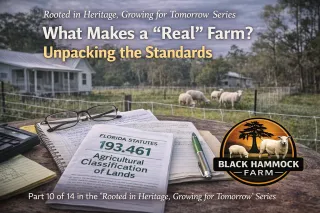
What Defines a Real Farm in Florida?
What actually defines a “real” farm? This article breaks down Florida law, agricultural standards, and why small, well-managed farms like Black Hammock Farm qualify—regardless of size. ...more
Local Family Farming News
April 03, 2026•9 min read
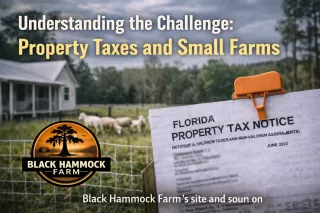
Property Taxes and Small Farms
Property taxes can make or break a small farm—but most people don’t understand how. This story explains what’s really at stake for farms like Black Hammock Farm and why the rules matter more than you ... ...more
Local Family Farming News
April 01, 2026•10 min read
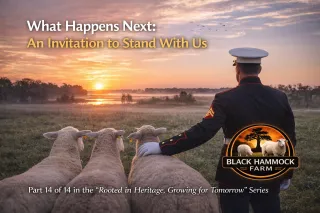
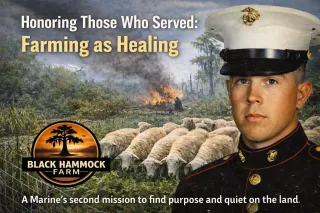
From Service to Stewardship
A Marine’s service didn’t end with the uniform. It evolved. This story follows the journey from combat to conservation, where stewardship, land, and livestock become a new mission rooted in purpose, h... ...more
Local Family Farming News
March 25, 2026•11 min read
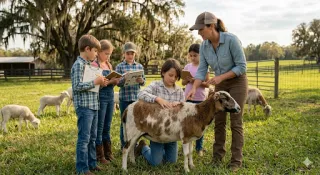
Reading the Flock: What a Shepherd's Hands Can Tell You About a Sheep's Health
Body Condition Scoring is the hands-on technique shepherds and veterinary professionals use to evaluate a sheep's nutritional health — no scales, no lab work required. At this Saturday's farm lab, stu... ...more
Local Family Farming News ,Sheep and Eco Management &Sheep Care Florida
March 12, 2026•5 min read
Farming as Healing for Veterans
A Marine’s second mission begins on the land. Learn how farming, sheep, and stewardship at Black Hammock Farm offer veterans purpose, quiet, and healing after military service. ...more
Local Family Farming News
February 13, 2026•10 min read
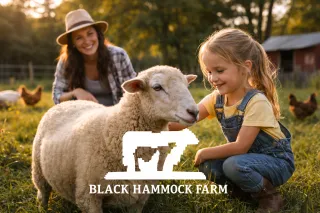
The Moment a Child Understands the Land
A child’s first touch of a sheep sparks bigger questions about food, land, and belonging. Discover how Black Hammock Farm helps families reconnect with where meals—and meaning—begin. ...more
Local Family Farming News
January 16, 2026•8 min read
1579 Walsh Street Oviedo,
Florida 32765
COMPANY
FARM SERVICES
LIVESTOCK PROGRAMS
FOLLOW US
POWERED BY:
© 2025 Black Hammock Family Farm. All rights reserved.